You bought the house for the big front windows, and now the whole street gets a clear view of you eating breakfast. Daytime privacy window film solves that without making you give up the light or the outlook you were paying for. During the day you see out perfectly well, while anyone walking past sees a soft reflection instead of your lounge room. Here’s how it works, what it can’t do, and where it makes the most sense in a Brisbane, Gold Coast or Ipswich home.
Why Curtains and Blinds Force a Trade-Off
Curtains and blinds only do one job at a time. Close them and you get privacy, but you lose your light and your view with it. Open them and the room comes alive again, along with every passer-by’s line of sight into it. For a street-facing living room or a bedroom level with the footpath, that usually means the blinds stay half shut all day, and the room never gets used the way it should.
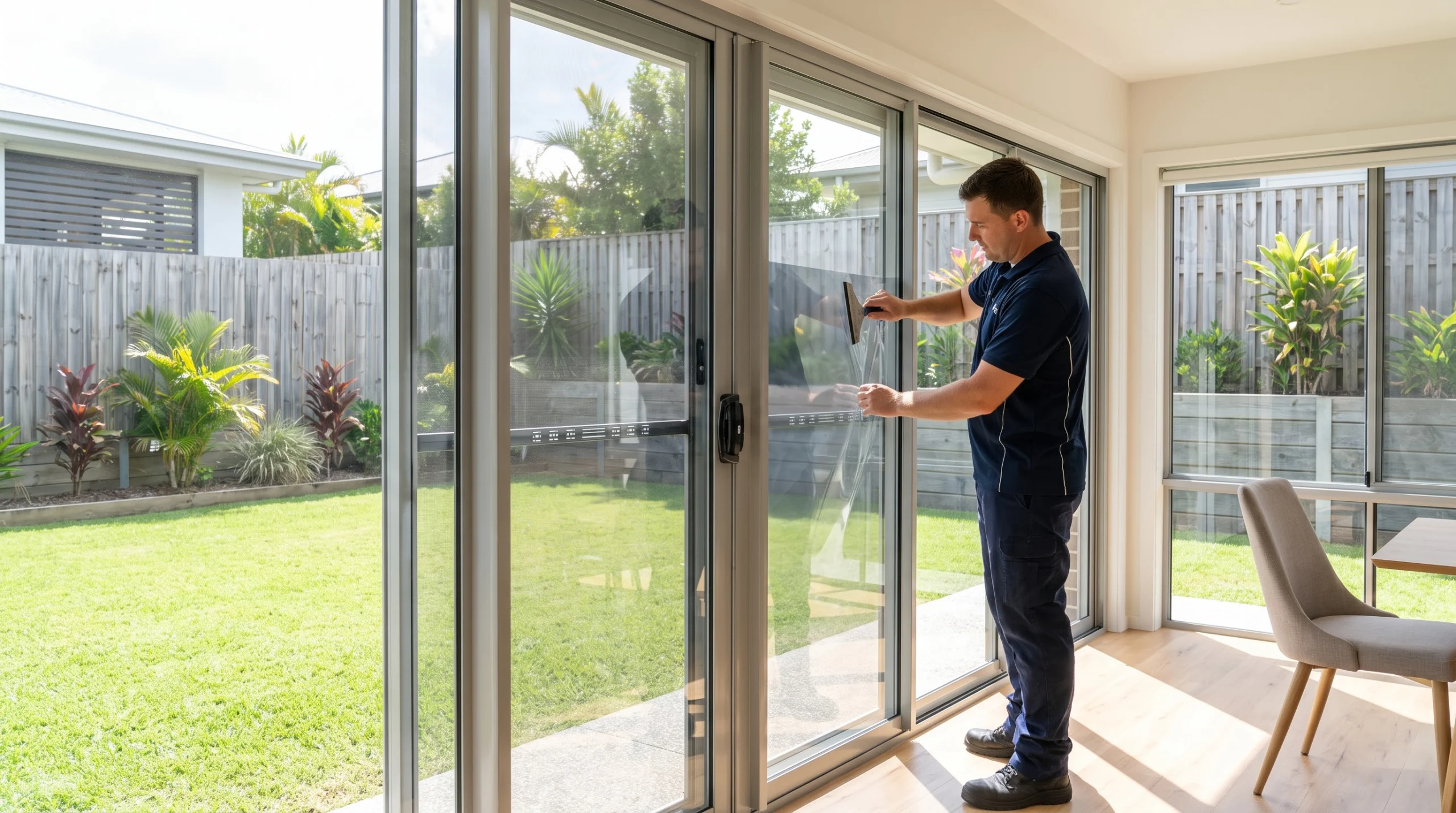
Privacy window film works differently because it sits on the glass permanently. There’s nothing to open, close or forget about, and the window keeps doing its job as a window.
How Privacy Window Film Lets You See Out But Not In
The principle is light balance. A reflective privacy film bounces back more light on whichever side of the glass is brighter. During the day, outside is far brighter than inside, so people on the street see a mirrored or tinted surface while you look out through what feels like lightly tinted glass. If you’ve been searching for privacy window film you can see out but not in, this is the most practical way to get that effect on the glass you already have.
How strong the effect is depends on the film and on how much brighter it is outside. A north-facing window in full Queensland sun gives you a stronger result than a shaded window under a deep verandah.
What Happens After Dark
Once the sun goes down and your lights come on, the balance flips. The inside is now the brighter side, so the film reflects back into the room and people outside can see in. This catches people out more than anything else about privacy film, so it’s worth knowing before you book. Most homes pair daytime privacy film with blinds they close in the evening, which still beats having them shut all day. If night-time privacy is your main concern, our guide to window film for night-time privacy covers the options that work around the clock.
Types of Daytime Privacy Film for Your Home
There are three main options, and the right one depends on how much privacy you need and how much reflection you’re happy to show the street.
One-way reflective film gives the strongest daytime privacy. From outside it reads as a mirrored finish, which suits modern homes and any window where privacy matters more than street appeal.
Dual-reflective film is the one we recommend most often for Queensland homes. It has a strong reflective face on the outside but a lower, more neutral reflection on the inside, so the room doesn’t feel surrounded by mirrors. It also rejects a good amount of heat and glare, which matters on west-facing glass.
Tinted privacy film is the subtlest choice. It darkens the glass slightly rather than mirroring it, so it suits character homes and streets where a reflective finish would stand out. The trade-off is a softer privacy effect.
Every film we install comes from the 3M and Solar Gard ranges, and all of them block up to 99% of UV rays.
Privacy Window Film That Lets Light In
Frosted film blurs your view. Daytime privacy film keeps it, and it lets most of your natural light through, just slightly softened. Rooms feel bright rather than dim, and you lose the harsh glare that bounces off TV screens and benchtops in the afternoon.
Because these films are reflective, they also cut solar heat. That makes a real difference on west-facing windows, where the afternoon sun can leave one room noticeably warmer than the rest of the house. If heat is as big a problem as privacy, it’s worth reading about the best home window film for Queensland’s summer heat before you decide, since some films handle both jobs well.
Where Daytime Privacy Film Works Best
A street-facing living room is the obvious candidate, but it’s far from the only one. Ground-floor bedrooms, home offices that look onto a neighbour’s driveway, and kitchens that face the footpath all benefit, because these are the rooms you actually use in daylight. Sliding doors onto a shared side path are another common one across Ipswich and the Gold Coast, where newer estates put houses close together.
We’ve lost count of the customers who only noticed the problem when a delivery driver waved at them through the front window. It’s a funny story, but it’s usually the moment they pick up the phone.
Apartments, Townhouses and Body Corporate Rules
Apartments and townhouses have their own version of the problem: the building across the way, the shared walkway past your kitchen, or the balcony next door. Daytime privacy film handles all of these well, but check your body corporate by-laws first. Some buildings have rules about changes to the external appearance of windows, and a reflective film is visible from outside. A tinted or low-reflective film often gets approved where a mirrored one won’t. If you rent, talk to your landlord before you book. Film is designed to stay on for the long haul, and it’s often worth pitching to your landlord as an upgrade they keep.
Privacy Film, Frosted Film or Blinds: Which Suits Your Window?
Each option solves a slightly different problem, so here’s how they compare at a glance.
| Feature | Daytime privacy film | Frosted film | Blinds or curtains |
| Daytime privacy | Strong | Strong | Strong when closed |
| Night-time privacy | Weak, pair with blinds | Strong | Strong when closed |
| Natural light | Most light kept | Diffused light | Lost when closed |
| Your view out | Clear | Blurred | Lost when closed |
| Heat and UV reduction | Good | Some | Some |
For bathrooms, entryways and anywhere you never need to see out, frosted window film is usually the better fit. For a room with a view worth keeping, daytime privacy film wins.
FAQs: Daytime Privacy Window Film
Can people see in at night with daytime privacy film?
Yes. Once your lights are on and it’s dark outside, the inside becomes the brighter side and the effect reverses. Close your blinds in the evening, or choose a frosted film for rooms that need privacy around the clock.
Will privacy window film make my room darker?
Slightly, but far less than closed blinds. Most people find the room feels softer and less glary rather than dark. We’ll show you samples on your actual glass so you can judge it for yourself.
Can privacy film go on double-glazed windows?
Often, yes, but not every film suits every glass type. Some reflective films can cause heat stress cracking on certain double-glazed or toughened units, so we check your glass before recommending a product.
Can I remove privacy window film if I move or change my mind?
It can, but removal is a careful job, and it’s where most of the risk to the glass sits. It’s best to treat privacy film as a long-term choice, which is why we’ll show you samples on your own windows before anything goes on. If you’re renting, check with your landlord first.
The double glazing and sunroof articles don’t mention removal, so they’re fine. I also checked what’s already published. The replacing-tint, choosing-a-company and car cost articles only mention removal as part of a re-tint, which is consistent. The one exception is the Queenslander article, whose FAQ calls film “a removable film” to reassure heritage owners. It’s minor, but worth softening next time that article is touched.
Get the Right Daytime Privacy Window Film for Your Home
Daytime privacy window film gives you what curtains can’t: privacy and your view at the same time. Pick the type that matches how reflective you’re happy for the outside to look, plan on blinds for the evenings, and check body corporate rules if you’re in a unit or townhouse. Get those three things right and the front room becomes somewhere you actually want to sit again.
Seeing it on your own windows is the easy part, and since you’re already on our site, you’ve saved yourself a search (subtle plug, we know). We handle home window tinting in Brisbane, the Gold Coast and Ipswich every day. Call 1300 Get Tint (1300 438 846) for a free consultation and we’ll bring samples to your place.