You’ve probably been calling around for car window tinting cost in Brisbane, and no doubt you’ve noticed the numbers can swing wildly. One place quotes $150, another quotes $600, and you’re left wondering what the actual difference is. It’s easy to fall into the trap of choosing the cheaper quote. But here’s the thing: it’s almost always the film quality. Let’s walk through what drives that price gap, and why we won’t quote you the cheap end (we won’t even use the cheap stuff) no matter how many times you ask.
Why Car Window Tinting Quotes in Brisbane Vary So Much
Dyed tint film is the reason a lot of quotes look tempting. It’s cheap to buy, quick to apply, and it makes the glass look dark. It’s also the film most likely to turn purple, bubble, or peel within a couple of years, especially parked outdoors in Brisbane’s UV. When you see a quote that looks too good to be true for a full car, there’s a good chance that’s what’s being fitted.
Why We Only Quote Ceramic Window Tint
We don’t stock dyed film, and we won’t quote it, even if it means losing a job to someone who will. Ceramic film rejects far more infrared heat, holds its colour instead of fading to purple, and doesn’t interfere with GPS, mobile signal, or toll tags the way older metallic films can. It costs more upfront because the film itself costs more to manufacture and the application takes more care, but it’s the only quality tint we’re willing to put a lifetime warranty behind. A cheap film that fails in eighteen months was never actually cheap, you just paid for it twice.
What a Lifetime Warranty on Ceramic Tint Actually Means
A lifetime warranty is only worth something if the film is genuinely built to last that long. We back our ceramic tint because we’ve seen it hold up in Queensland conditions for years without the fading, cracking, or adhesive failure that cheaper film shows within a couple of summers. If a warranty comes attached to a film that was never going to make it that far, it’s not really a warranty, it’s a marketing line.
Heat Rejection and UV Protection: What You’re Actually Paying For
A big part of what separates a cheap tint job from a proper one comes down to two things you can’t see just by looking at the glass: heat rejection and UV protection. Basic dyed film blocks some visible light but does very little for the infrared heat that actually makes a parked car unbearable. Ceramic film is built specifically to reject that heat while still letting light through, which is why a cabin with ceramic tint feels noticeably cooler even at the same shade level as a cheaper film.
UV protection works the same way. Standard glass and cheap tint film let a meaningful amount of UV rays through, which is what cracks dashboards, fades trim, and does slow damage to skin on long drives. Quality ceramic film blocks the vast majority of that. It’s not a feature you notice on day one, but it’s a big part of what you’re actually paying for when a ceramic quote comes in higher than a dyed film quote.
There’s also a labour side to this that’s easy to overlook. Ceramic film is less forgiving to install than dyed film, it needs a steadier hand to avoid stretching or lifting the edges, and it shows every mistake more clearly once it’s cured. A rushed or inexperienced install can waste a good film’s performance just as easily as a cheap film wastes a good install. Part of what you’re paying for is someone who’s fitted enough of it to get it right the first time. And, if I were to be cheeky (haha) I would say, you’ve found the right experts for the job!
What Actually Determines Your Car Tint Cost
A few things move the price, even within ceramic film:
- Vehicle size and window count, since an SUV or seven-seater has more glass than a hatch
- Curved or compound glass, particularly on coupes and rear pillars, which takes longer to fit cleanly
- Old tint removal, if there’s existing film that needs stripping before we start
- Legal VLT limits for your windows, since we won’t go past the darkest legal tint even if that’s what you’re after
Car Tint Versus Home Tint: Why the Cost Logic Is Different
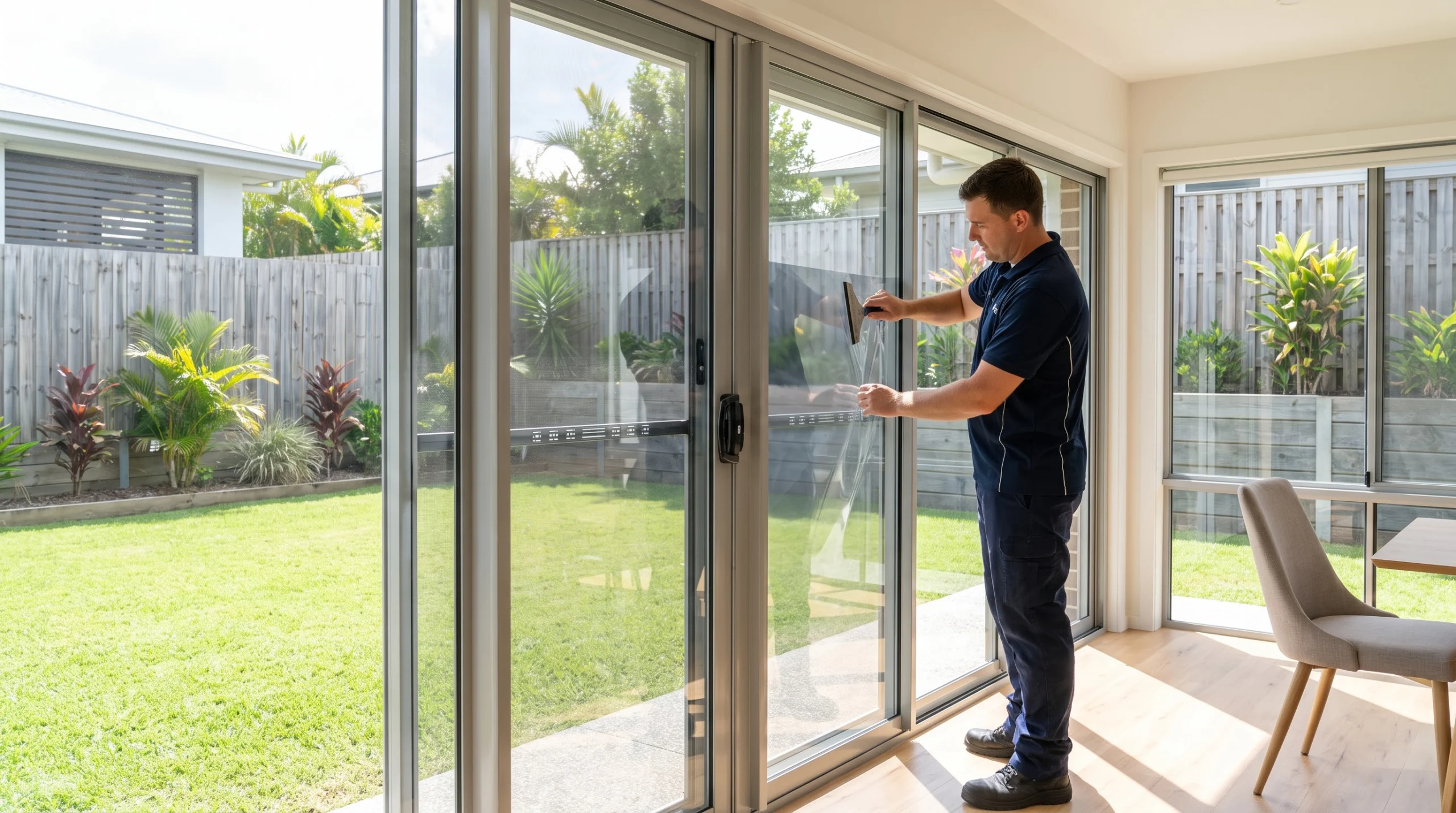
We get asked this a lot by people who’ve had their car done and are now pricing up their home. Car glass is curved, cut tight around mirrors and trims, and sometimes needs a panel removed for a clean edge. That makes the labour-to-glass ratio much higher in a car than in a house, where the windows are flat and easier to access. So don’t assume tinting a house scales up the same way per square metre off your car quote, it usually works out cheaper per pane, not more expensive.
What’s Included When You Get a Quote
A proper quote isn’t just a number, it’s a conversation about your car, your priorities, and your tinting options. We’ll ask about your vehicle, check what film suits your glass, confirm what’s legal for your specific windows, and give you a written price before anything gets fitted. If you’ve had a quote elsewhere that was just a dollar figure with no explanation of the film or the process behind it, that’s usually a sign it’s worth getting a second opinion.
Why We Don’t Offer Mobile Tinting
You might notice we don’t do driveway or car park appointments, and that’s deliberate. Ceramic film needs a controlled environment to go on properly: no dust blowing around, consistent temperature, and enough space to work each panel without rushing. A mobile setup fights against all three. We’d rather ask you to come to us and get a result that holds up for the life of the warranty than offer the convenience of a driveway job and risk the finish.
How to Get the Most Out of Your Investment
If you’re protecting the cabin, it’s worth thinking about the interior at the same time as the glass. Ceramic tint blocks UV that fades trim and cracks dashboards, but families running a car hard with school runs and sports gear often get more value pairing that protection with a proper look at what’s actually wearing the interior down.
And if you’re already spending on tint, it’s worth asking what a combined tint and ceramic coating package looks like for your car, since to do both is often more cost-effective than tackling them as two separate jobs down the track.
Frequently Asked Questions
Why won’t you quote a cheaper film if that’s all I want?
Because a film that fails within a couple of years costs you more in the long run, not less, once you factor in stripping and redoing it. We’d rather turn down the job than put our name on something we know won’t last.
Does ceramic tint cost more than standard tint everywhere in Brisbane?
Generally, yes, since ceramic film costs more to manufacture and requires more careful application. The gap has narrowed over the past few years as ceramic has become more mainstream, but it’s still a premium product compared to dyed or basic metallic film.
Does the cost to tint change much between car owners with similar vehicles?
A little, mostly due to glass condition and whether old tint needs removing first. Two owners with the same model can get slightly different quotes if one car has existing tint that has to come off before we start.
Will a more expensive tint actually make a noticeable difference in my car?
Yes. Ceramic film rejects significantly more heat than dyed film, so the cabin stays noticeably cooler in direct sun, and it does so without needing to go darker than what’s legal.
Get a Straight Quote on Car Window Tinting Cost
You came here for a straight answer, so here it is: car window tinting cost in Brisbane and Ipswich depends on your vehicle and the film, and we only ever quote ceramic, because it’s the only film we’re prepared to back for the long haul. Call 1300 Get Tint (1300 438 846) for a free consultation and we’ll assess your car and give you a proper number, not a guess. That’s the standard we hold ourselves to, and yes, that’s a shameless plug, but we’d rather be upfront about it than pretend otherwise.