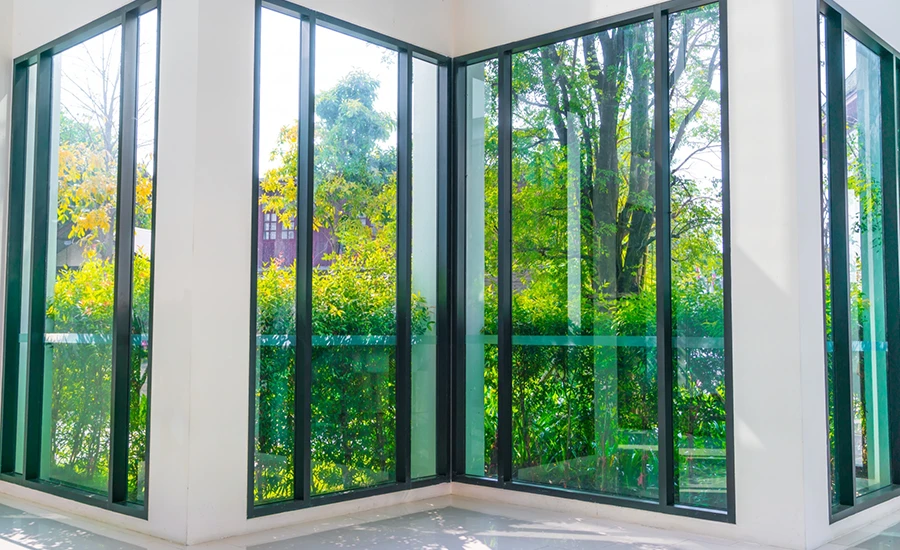
There’s a common misconception about privacy window film that’s worth clearing up straight away. A lot of people assume that if you want privacy, you have to sacrifice natural light or your outlook. Frost the glass, draw the blinds, or live with people looking in. Those are not your only options.
One-way privacy window film gives you daytime privacy while keeping your view and your natural light largely intact. It’s one of the most popular residential window film applications for Queensland homes, and once you understand how it works, it’s easy to see why.
How Daytime Privacy Window Film Actually Works
One-way privacy film works on a simple principle: it reflects more light on the brighter side of the glass. During the day, when there’s more light outside than inside your home, the film appears reflective from the outside. People looking toward your windows see a mirror-like surface rather than a clear view into your living space.
From inside, you still have a clear view out. Natural light still enters the room. Your outlook is unchanged.
It’s worth being upfront about one limitation. The effect reverses at night when your interior lights are on and it’s dark outside. At that point the inside becomes the brighter side, and the film loses its one-way effect. For nighttime privacy you’ll still want blinds or curtains. But for the hours when most Queensland homes are most exposed, during the day when the sun is up and you’re going about your life, one-way privacy film does exactly what it promises.
Why Daytime Privacy Matters More Than Most People Realise
Think about the layout of your home and where you actually spend your time during the day. Living rooms, kitchens, home offices, and dining areas are typically the most used spaces, and they’re also the spaces most likely to have large windows facing the street, a neighbour’s property, or a shared space.
In Queensland, those windows tend to be generous. That’s one of the things that makes older Queensland homes so appealing. But generous windows on a busy street or close to a neighbour’s line of sight mean you’re either constantly aware of being visible or you’re keeping the blinds closed and losing the light.
Privacy film lets you have the light and the view without feeling like you’re on display. For home offices in particular, where you might be sitting at a desk facing the street for hours at a time, it makes a significant difference to how comfortable and relaxed you feel in your own home.
One-Way Film vs Tinted Privacy Film: What’s the Difference?
One-Way Reflective Film
One-way reflective film has a mirror-like appearance from the outside during daylight hours. It provides strong daytime privacy and also rejects a meaningful amount of solar heat, which is a useful bonus in Queensland’s climate. The reflective finish is visible from the street, which some homeowners love and others prefer to avoid.
Tinted Privacy Film
Tinted privacy film reduces visibility without the reflective exterior appearance. It works by darkening the glass to a degree that makes it harder to see inside from outside, while still allowing a reasonable amount of natural light through. It’s a subtler look than reflective film and tends to suit homes where the exterior appearance is a priority. The privacy effect is genuine but slightly less pronounced than a reflective product, particularly in very bright conditions.
Your installer can walk you through both options with samples so you can see exactly what each looks like on your glass before you commit.
Which Rooms Benefit Most From Privacy Film?
Living Rooms and Lounge Areas
Street-facing living rooms are the most common application. If your couch faces a window that looks onto a footpath or a neighbour’s driveway, privacy film transforms how you use that room during the day.
Home Offices
Working from home with a window behind or beside your desk can feel uncomfortably exposed, particularly on a busy street. Privacy film lets you work with natural light without the fishbowl feeling.
Kitchens and Dining Areas
Ground floor kitchen and dining windows that face neighbouring properties are another very common application in Queensland homes, particularly on suburban blocks where houses sit close together.
Bedrooms
For bedrooms on the ground floor or facing another building, privacy film is a practical alternative to heavy curtains that block light entirely.
H2: Will Privacy Film Affect the Look of My Home From the Outside?
This is one of the most common questions and it’s a fair one. Reflective privacy film does change the exterior appearance of your windows. Whether that’s a problem depends on your home and your preference.
Many homeowners find that a consistent reflective finish across the windows actually improves the exterior appearance, giving the home a more uniform, contemporary look. Others prefer a tinted film that’s less visually distinct from standard glass.
A good installer will show you both options in the context of your specific home before any film goes on. There’s no need to guess.
Privacy Film and Strata or Body Corporate Rules
If you live in a unit, townhouse, or any property governed by a body corporate or strata scheme, it’s worth checking the rules around window film before you proceed. Some schemes have guidelines around reflective film or changes to the exterior appearance of the building.
In most cases this isn’t a barrier, but it’s better to confirm before installation rather than after.
Frequently Asked Questions
Does one-way privacy film work on all window types?
It works on most standard residential glass including single-glazed and double-glazed windows. Your installer will assess the glass type and confirm the right product for your specific windows before installation.
How much natural light does privacy film block?
It depends on the product. Lighter tinted films block very little natural light. Darker or more reflective products reduce light more noticeably. Your installer can show you the light transmission rating for each option so you can make an informed choice based on your room and your priorities.
Can privacy film be applied to only part of a window?
Yes. A common approach for street-facing windows is to apply film to the lower portion of the glass where visibility is the main concern, leaving the upper section clear. It’s a practical solution that maximises both privacy and light.
Is privacy film permanent?
No. Window film can be removed without damaging the glass if you change your mind or move house. It’s a flexible solution in that sense.
A Simple Change That Makes Your Home Feel Like Yours Again
Privacy window film isn’t a dramatic renovation. It goes on quietly, it doesn’t change how your home looks from the inside, and within a day you’ll wonder why you didn’t do it sooner. If you’ve been living with blinds perpetually half-closed or a nagging sense that your living room is a bit too visible from the street, it’s a very easy problem to fix.
You’re in exactly the right place to find out what’s possible for your home. The team at 1300 Get Tint works with homeowners across Brisbane, the Gold Coast, and Ipswich every day, and a free consultation will give you a clear picture of which privacy film suits your windows, your home, and your street. Get in touch today.